Airports are symbolic arenas for time, rules, and transitions. Even if you rarely fly, your mind borrows this setting to work through pressure, deadlines, or life changes. The content is metaphor, not a literal travel prompt.
What It Means to Dream About Missing a Flight
Dreams of missing a flight land with a jolt: the boarding doors closing, the echo of announcements, your heart sprinting. These dreams often surface when life feels fast and unforgiving, when timing matters and you worry it might not be on your side. They can mirror pressure, indecision, or that uneasy sense of falling behind. Yet they also hint at transitions and new directions. Read on to map the psychology, symbolism, and practical steps that can turn this dream from pure panic into a useful guide.
Table of Contents
What It Means When You Dream of Missing a Flight
When a dream strands you at the airport, the symbolism is rarely about aviation. It is about timing, readiness, and momentum. A flight is a scheduled leap - a commitment to depart one state and arrive in another. Missing it can reflect anxiety about opportunity, deadlines, or motivation. The dream often appears when your calendar is crammed, your mind is noisy, and you’re trying to hold several threads together at once.
Emotionally, the dream compresses familiar stressors: the rush to pack, the search for a gate, the sinking feeling that time ran out. It may echo a fear of not meeting expectations, falling behind peers, or letting yourself down. Even if you rarely travel, the airport becomes a stage for life’s choreography. Do you feel prepared, or perpetually last-minute? Are you setting your own pace, or reacting to everyone else’s?
Missing a flight can also mark a threshold. Perhaps a transition - new job, relocation, relationship change - is near, but you feel unready or ambivalent. The psyche paints this hesitation as a closed jetway. That pause is not failure; it’s information. If the dream recurs, the message often shifts from pure alarm to a call for clarity: what exactly are you afraid to lose, and what are you trying to protect?
Context matters. Notice the details your dream offers: Are you calm or frantic? Alone or with someone? Is the airport familiar, bright, confusing? Sensory fragments carry clues. The harsh fluorescent lights can embody scrutiny, the cold plastic of a boarding pass can suggest bureaucracy, the PA system’s metallic voice may symbolize external rules you keep trying to obey. For a broader reading through archetypes and motifs, explore a symbolic dream interpretation where a flight can represent aspiration, fate, or a rite of passage.
✨
Key Insight
Missed-flight dreams surge during periods of change. They do not predict failure - they spotlight where your planning, priorities, or boundaries need attention.
Common Scenarios and What They Reveal
✦ Arriving Late at the Airport

Arriving late and watching your plane taxi away tends to mirror everyday overwhelm. The dream compresses all the tiny delays - lost keys, last-minute emails, one more errand - into one decisive moment. Psychologically, lateness reflects an inner belief that the world’s tempo is faster than yours. In real life , you might be keeping pace but still feel chronically “behind.” Ask where you are overcommitting, and where you need padding in your schedule. Sometimes, a small shift in morning routine or a clearer cutoff time at work calms this dream surprisingly fast.
✦ Lost or Forgotten Passport

In dreams, a passport often stands in for identity, legitimacy, and permission. Losing it suggests doubts about your readiness to enter a “new country” of experience - a promotion, a commitment, an unfamiliar social world. You may worry your credentials won’t hold up, or that you’ll be exposed as unprepared. Consider where you seek validation and where you can self-authorize. Refreshing skills, revising a portfolio, or naming your accomplishments out loud can restore that inner document that says: you belong here. Sometimes the dream simply says confidence needs renewing.
✦ Unable to Find the Right Gate

Wandering through endless concourses, wrong turns, and duplicated signs points to decision fatigue. You may be navigating too many choices at once or holding conflicting goals. The airport’s labyrinth is your mental map - busy, over-labeled, a little loud. If this scene repeats, try narrowing options in waking life: pick a single next step and commit for one week. You’ll often find the dream’s corridors simplify. It’s a reminder that clarity grows when you reduce noise, not when you chase every possible departure.
✦ Oversleeping and Missing the Flight

Oversleeping in a dream can feel like betrayal by your own body. Usually it signals ambivalence rather than laziness. Part of you wants the change the flight represents; another part wants to stay safe. You hit snooze because you’re not convinced the destination is worth the jolt. Explore the fear beneath your hesitation. Make the step smaller or the runway longer - more preparation, a trial phase, a clearer map of what happens after takeoff. When your waking actions respect both excitement and fear, this dream tends to fade.
✦ Stuck in Traffic on the Way to the Airport

Traffic represents external constraints - obligations, systems, other people’s timelines. You may feel your efforts are solid, but progress is blocked by factors you can’t control. The frustration is real; the horn noise and brake lights say it all. The dream’s medicine is agency: adjust what you can. Build margin, request help, renegotiate deadlines, or choose alternate routes. It also hints at acceptance where control is impossible. When you stop arguing with the red lights, your energy returns for the moment the road finally opens.
✦ Boarding the Wrong Flight
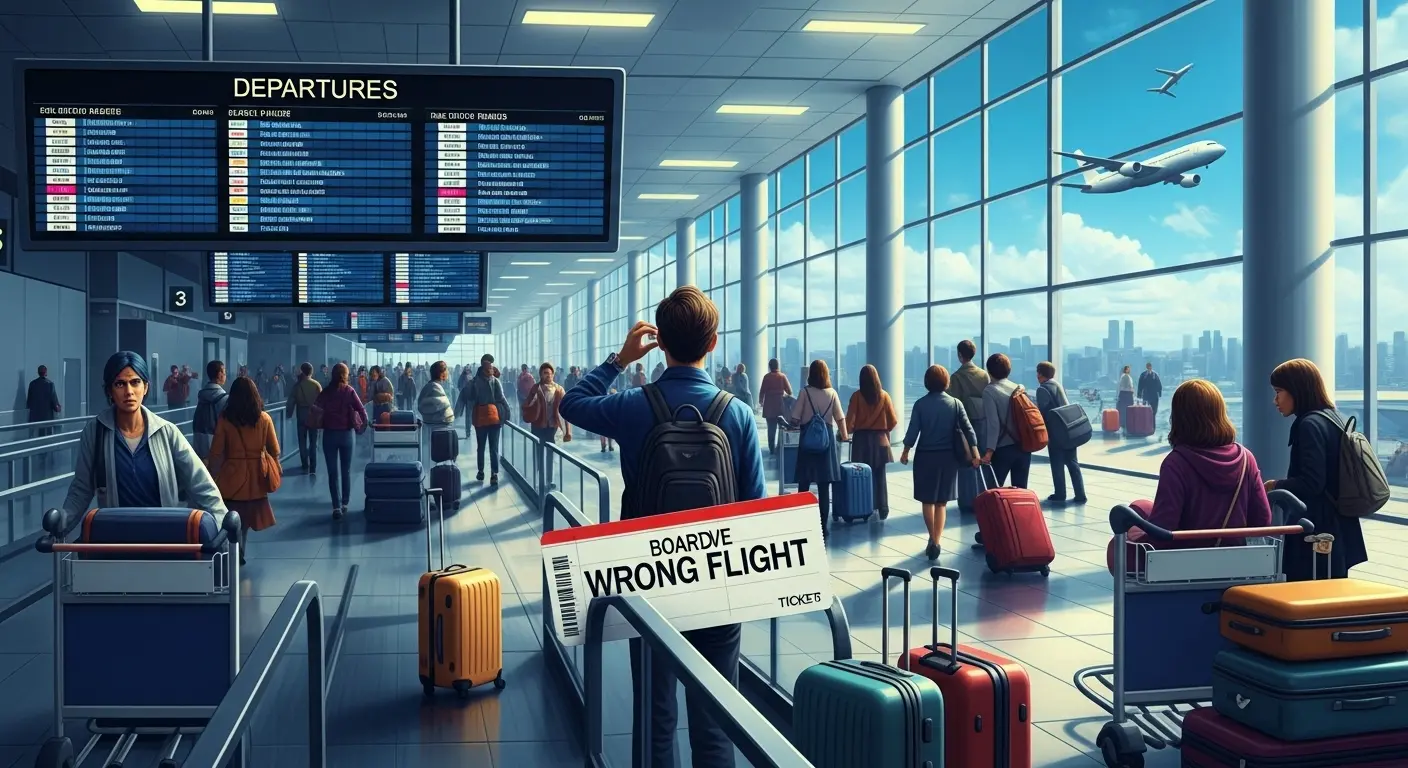
Mistakenly boarding the wrong plane reflects an identity-in-progress. Maybe you said yes out of habit, or you followed the nearest crowd. Your inner compass knows the mismatch and triggers this corrective dream. Rather than panic, take it as a prompt to audit your commitments. Which projects, roles, or relationships align with your actual destination? Which are inherited shoulds? Realign the itinerary: cancel what dilutes your aim, return to the gate that carries your name on the screen. Precision beats perfection here.
✦ Flight Cancelled or Delayed
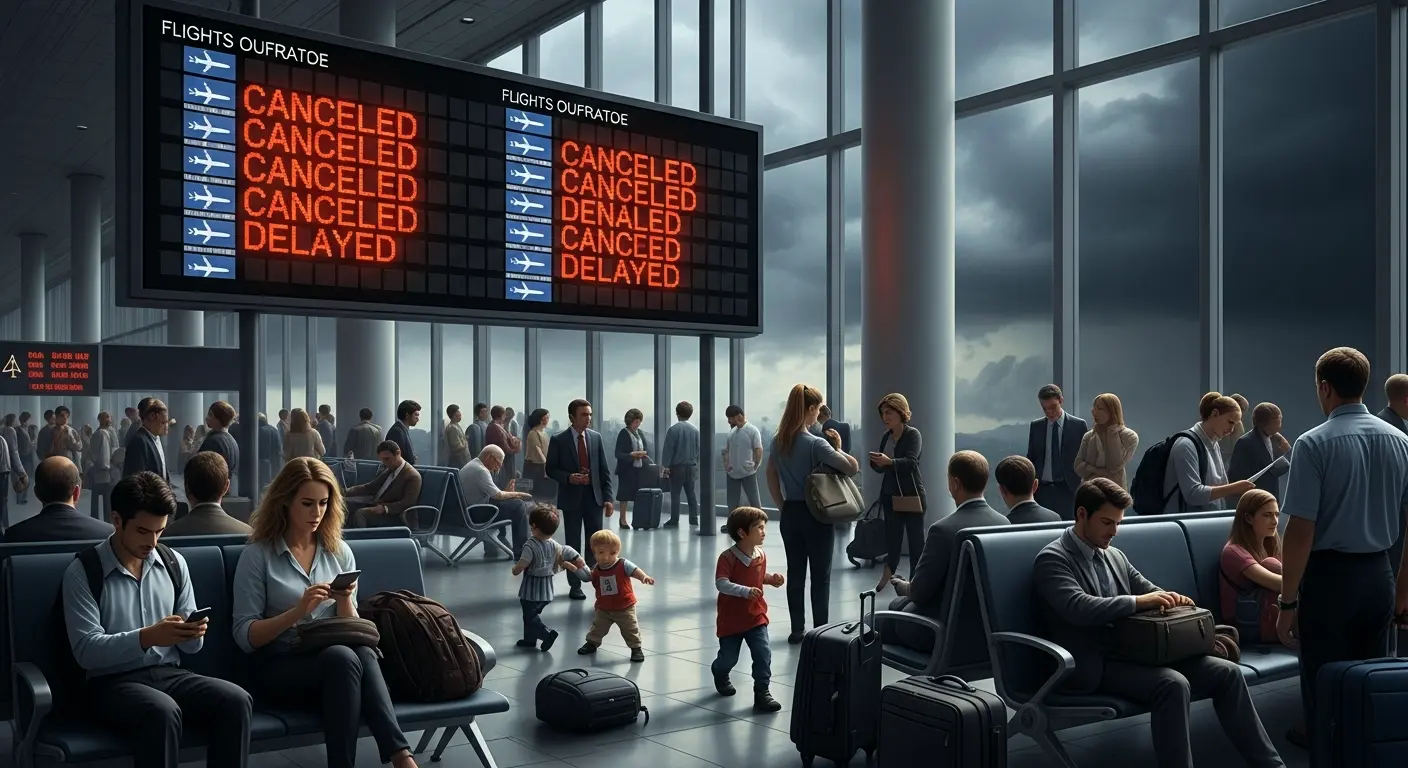
When the board flashes cancelled, the message is about timing beyond your command. Plans are derailed by weather, systems, or sheer chance. The dream reflects irritation with slowdowns and a fear that momentum will never return. Yet cancellations can be protective pauses. They invite flexibility and plan B thinking. In waking life, build contingency as a rule, not a last resort. Pack snacks, metaphorically speaking. Resilience grows when you expect some turbulence and still keep faith with the trip.
✦ Missing a Connecting Flight

The missed connection is the classic transition dream. You completed one leg of the journey but the handoff failed - between roles, identities, or life phases. Perhaps you graduated but feel uncertain about work; maybe you ended one relationship and haven’t yet found a new rhythm. The dream highlights the liminal gap. Shrink the distance between gates: schedule supports, name milestones, protect rest. Treat the layover as part of the trip, not dead time. Curiously, when you honor the in-between, the next door opens sooner.
Psychological Perspectives
Freud might view missing a flight as displaced desire or anxiety around potency and control. The airport stands in for the body, the scheduled departure for a drive toward release. In this reading, fear of missing out can echo fear of inadequacy, with the closed jetway symbolizing an opportunity lost before it became possible. While the language is unmistakably early psychoanalysis, it captures how shame and urgency often fuse in these dreams.
Jung would widen the lens. He’d see the airport as a threshold arena, and the flight as a path toward individuation - the unique life you are meant to live. Missing it suggests postponement of a necessary crossing, or a warning that your ego and deeper Self are negotiating terms. The key is not blame but dialogue with symbols: what part of you is the traveler, the gate agent, the pilot? Which inner figure actually says “Board now”?
Contemporary sleep science adds a complementary view. During REM, the brain rehearses scenarios, integrates emotions, and stress-tests predictive models. A missed-flight dream may be a simulation that lets you feel panic in safety, then experiment with recovery. The mind rehearses: what if I’m late, unready, off-track? How do I adjust? If your days have been packed, the brain simply mirrors that load. It’s less prophecy and more overnight processing - a nocturnal debrief to prepare for tomorrow’s complexity.
✨
Clinical Note
Intensity matters less than trajectory. If the dream evolves from pure panic to problem-solving - asking for help, rebooking, finding another route - your psyche is already integrating resilience.
Spiritual and Personal Growth Meanings
From a spiritual angle, the missed flight can signal misalignment with purpose , or timing that isn’t ripe. It’s the soul’s gentle way of saying: your body wants speed, your deeper direction asks for patience. Sometimes the plane you missed was never yours. The dream invites trust in right timing and in paths that open without force. If you wake serene despite the delay, notice that too - acceptance can feel like quiet air after a storm.
There is also a calling hidden in the gate. Many traditions see gates as initiatory thresholds, guarded by figures who test readiness. In that light, missing the flight is not punishment; it is apprenticeship. You are being asked to gather skills, to restore energy, to name a clearer intention. When you do, the next boarding call sounds different - unmistakably yours. Spiritual work here looks like simplification: fewer distractions, more listening, practices that ground you so the ascent is clean.
Finally, the dream can encourage compassion for yourself. Growth rarely follows a straight runway. You take off, circle back, taxi, try again. The important thread is continuity of care - small rituals that keep faith with your aim even when doors close. Paradoxically, that steadiness creates the conditions for surprise opportunities to land.
What To Do After Such a Dream
Action turns a stressful dream into a practical ally. A few grounded steps can reduce its frequency and transform its tone. Choose what fits, then test for one or two weeks:
- Write the scene quickly. Jot down who was there, what you carried, the exact snag. Sensory notes help - the loudspeaker, the cold tile, the rolling suitcase sound.
- Name the real-life parallel. Which project, relationship, or decision currently feels “time-sensitive”? Often it’s obvious once you see it on paper.
- Shrink the decision. If you’re hesitating, choose a smaller first leg. Replace “overhaul everything” with “ship version 1 by Friday”.
- Add margin to mornings. Ten extra minutes changes the day’s physiology. Protect a buffer the way you protect the flight itself.
- Make a contingency micro-plan. Identify one alternate route if plan A slips. Pre-deciding lowers anxiety during surprises.
- Audit commitments. If you boarded the wrong flight in the dream, list current yeses. Cross off or reschedule two that dilute your direction.
- Close the day. A 5-minute evening review calms the brain’s need to rehearse chaos at night. Pick tomorrow’s top task, set out clothes, lay the metaphorical passport where you’ll see it.
And if the dream keeps returning, consider rhythms and recovery. Overdrive without rest invites the same script. Recovery includes sleep regularity, light movement, and honest boundaries. A simple calendar reset - even moving one demanding block to a more realistic hour - helps. Share your plan,, your calendar, or your worries with someone you trust. The dream often softens when you aren’t carrying it alone.
Somnologist's Note
“Dreams about missing flights are a classic expression of time pressure and transition,” says somnologist Alexandra Gainsbourg. “They’re not a verdict, they’re a rehearsal. The sleeping mind tests how you respond when control slips. People who translate the dream into small changes - clearer priorities, better buffers, more flexible plans - tend to report fewer episodes and a stronger sense of agency.” Her suggestion is simple and precise: treat the dream as a status report, not a sentence - then act on what it highlights.
FAQ
When you miss a flight in a dream, anxiety, timing, and change are often at play. This FAQ expands on common worries that didn’t fit neatly into the main sections, offering short, practical answers you can use tonight and tomorrow morning.
Why do I keep dreaming I miss flights when I never travel?
Does missing a flight in dreams mean I’ll miss real opportunities?
No. It highlights concerns about opportunity, not a fixed future. Used well, the dream is a nudge to prioritize, add buffer time, and clarify goals - actions that increase the odds you’ll catch what matters.
How can I reduce these dreams if they feel exhausting?
Keep a short sleep routine, wind down screens earlier, and do a quick evening plan for the next day. Shrink large tasks into smaller first steps. If stress is high, try breathwork or a brief body scan before bed.
What if I felt strangely calm after missing the plane?
Calm suggests acceptance or an intuitive sense that the timing wasn’t right. This may reflect growing resilience, a new boundary, or trust that a different route suits your destination better.
Sources & Further Reading
- The Interpretation of Dreams - Sigmund Freud (1900).
- Man and His Symbols - Carl G. Jung (1964).
- Finding Meaning in Dreams: A Quantitative Approach - G. William Domhoff (1997).
- The Scientific Study of Dreams: Neural Networks, Cognitive Development, and Content Analysis - G. William Domhoff (2003).
- Dreams and Nightmares: The Origin and Meaning of Dreams - Ernest Hartmann (2001).
Read more