Some symbols are widely shared (water, houses, flight), yet meanings still depend on culture and personal history. Universals offer hints, not rules. Start with your own associations, then check broader interpretations for added perspective.
The Science Behind Dream Symbols
Dreams can feel like late-night cinema - vivid, fast, and slightly out of reach the moment we wake. Yet the images that appear are rarely random. Symbols in dreams often mirror undercurrents in our waking life: the anxieties we don’t name, the hopes we carefully protect, the transitions we’re still learning to navigate. This guide explores the language of dream symbols, how psychologists interpret them, why culture matters, and practical steps to work with your own dreams more skillfully.
Table of Contents
Common Dream Symbols and Their Meanings
Think of dream symbols as the mind’s shorthand. A single image can carry layers of meaning - personal history, immediate stress, cultural stories you’ve absorbed over time. Below are some of the most reported symbols and how they often function in the dream world. Your associations matter, of course, so let the descriptions spark your own reflections rather than replace them.
✦ 1. Falling

That sudden drop in your stomach - it’s a classic. Falling dreams frequently signal a fear of losing control or a sense that a situation is slipping through your fingers. You may be overwhelmed by an upcoming deadline, a relationship shift, or a financial change. Sometimes falling points to a need to surrender what you’ve been gripping too tightly. Consider where you fall from, the height, and whether you hit the ground. A gentle descent can suggest a gradual letting go; a chaotic plunge may reflect surging anxiety. Occasionally, the dream ends before impact, highlighting uncertainty more than catastrophe.
✦ 2. Flying

Flying dreams often carry an unmistakable rush - a felt sense of possibility. Effortless flight tends to mirror confidence, creativity, and a desire for autonomy. If you are skimming treetops with ease, your waking life may be aligning with your values. Struggling to get airborne or battling wind can hint at obstacles, self-doubt, or critics you’re internalizing. Height matters, too. High altitude flight may express big ambition or spiritual perspective; low flight can show cautious growth. The mood is key: exhilaration points to empowerment; fear suggests the leap feels risky, even if the direction is right.
✦ 3. Being Chased

When your dream turns into a chase scene, ask: what am I running from? The pursuer can be a person, an animal, or a shadowy presence - often representing a problem, a tough decision, or a part of yourself you’d rather not face. If the chaser has a clear identity, study what they symbolize for you. Running might indicate avoidance; hiding suggests a wish to disappear; turning and confronting can mark readiness to negotiate or set boundaries. Notice the terrain, too. Narrow alleys and dead ends amplify feeling trapped; open fields introduce options and the possibility of choice.
✦ 4. Teeth Falling Out
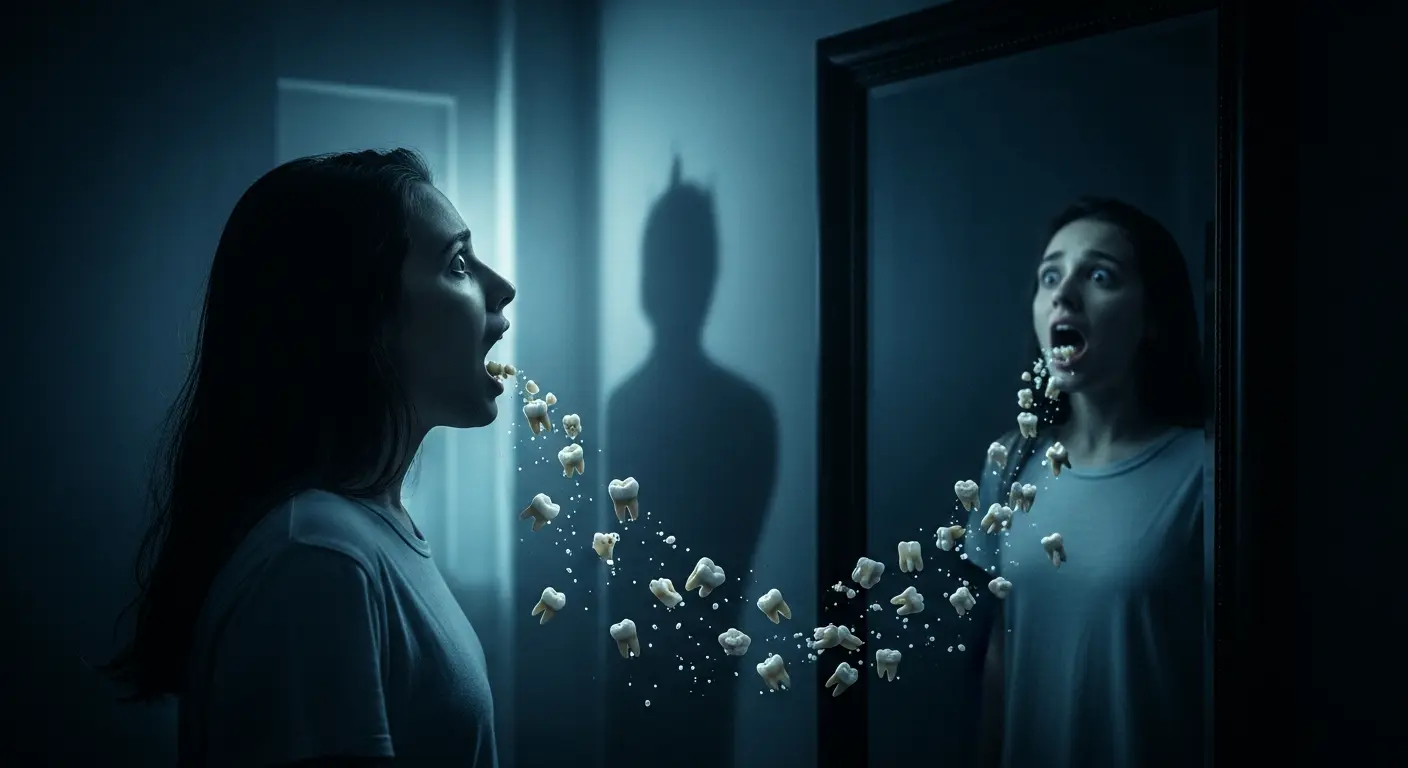
Few images are as unnerving as watching your teeth loosen and drop. Teeth symbolize strength, voice, and social presence - so losing them in a dream commonly reflects concerns about appearance, aging, or feeling powerless to influence events. The setting matters: a public space can emphasize social anxiety; a mirror scene reflects identity or self-appraisal. In transitional periods (changing jobs, graduating, becoming a parent), these dreams may mark adaptation. Some traditions view tooth-loss dreams as renewal - the old making way for the new. Track what you were trying to say or eat in the dream; those details often point to the area of life in question.
✦ 5. Water

Water is a shape-shifter, and so are emotions. Calm lakes often mirror inner steadiness and clarity; a clean pool suggests boundary and containment. By contrast, murky or stormy water can signal confusion, grief, or anger moving beneath the surface. Drowning dreams might indicate feeling overwhelmed by responsibilities or a life change happening too fast. Pay attention to depth: wading in shallow water points to surface concerns; plunging into the ocean hints at exploring your unconscious. Taste and temperature add nuance - saltwater can denote healing or old tears; icy water can point to numbing or avoidance, while warm water suggests comfort and processing.
✨
Context Is King
Dream symbols rarely mean just one thing. Your feelings during the dream, who else appears, and what happens before and after the image - these details shape meaning more than any single dictionary entry.
✦ 6. Naked in Public
Nudity in dreams exposes vulnerability and authenticity. If you feel ashamed or frantic, the symbol may reflect fear of criticism, perfectionism, or a real-life reveal you’re dreading. If you feel oddly calm, the dream might depict a desire to live with fewer masks - to be seen as you are. Note where the scene unfolds: an office spotlights performance anxiety; a classroom hints at learning, evaluation, or being "graded" by others. Reactions in the dream also matter: if no one notices, it can suggest the fear is louder than the reality.
✦ 7. Houses or Buildings

Houses often act like maps of the self. Floors, rooms, and hallways can reveal how you organize your inner world. A bright kitchen may symbolize nourishment and creativity; a locked basement can point to repressed memories or emotions stored away. Discovering a secret room frequently signals new potential - a capacity you didn’t know you had. Pay attention to condition. A renovated space suggests healing; a crumbling wall points to areas needing care. If you’re renting, themes of impermanence or identity-in-progress may be at play. Guests represent influences - think about who enters, who stays, and who must be shown the door.
Psychological Perspectives on Dream Symbols
For over a century, psychologists have debated what dream symbols do. Sigmund Freud famously called dreams the royal road to the unconscious, proposing that many images disguise wishes we can’t admit directly. In this view, dream symbols often act as masks - visual riddles standing in for conflict, desire, or taboo. Sexual themes are common, yes, but so are power struggles, rivalries, and unspoken grief.
Carl Gustav Jung extended the conversation in a different direction. He posited a collective unconscious - a shared well of images and stories that recur across cultures. Jungian interpretation treats some symbols as archetypal: the shadow, the wise old person, the hero, the trickster. When an archetype enters a dream, it may be less about yesterday’s argument and more about lifelong development. Jung saw symbols as living bridges - linking our everyday self with deeper layers of psyche and potential.
Contemporary research adds more threads. Neuroscience suggests dreams support memory consolidation, emotional processing,, and problem-solving. The brain sifts through recent experience, integrating what matters, discarding what doesn’t. Threat simulation theory proposes that dreaming rehearses adaptive responses to danger - a mental gym for survival skills. If your week includes a tricky conversation or a new risk, your dreams may test-drive responses, remixing symbols into scenarios that feel familiar yet strange.
What unites these perspectives is that symbols serve function as much as meaning. They regulate feeling, amplify insight, and sometimes spark creativity. You don’t have to choose one lens forever. Experiment: read your dream through a Freudian lens (What hidden wish might be disguised?), then a Jungian one (What archetype is speaking?), then a cognitive-behavioral lens (What problem is the dream rehearsing?). Cross-referencing can turn a single scene into a layered conversation with yourself.
✨
Blend Perspectives
Personal meaning first, cultural meaning second, theory last - that order keeps your interpretation grounded in lived experience while staying open to broader insight.
If you enjoy structured guidance, tools for symbolic dream interpretation can help you trace patterns across recurring images and connect them with daily life themes, without forcing a one-size-fits-all answer.
Cultural Variations in Dream Symbol Interpretation
Symbols don’t float in a vacuum; they swim in culture. A serpent in one tradition is wisdom and healing, in another deception or danger. In some Eastern contexts, dreaming of ancestors indicates protection; in other places it suggests unresolved obligations. Water ceremonies, household spirits, sacred mountains - all of these can inform how dream images feel and what they’re said to foretell. Even color meanings vary: white can mean purity or mourning depending on the culture.
Immersion in multiple cultures complicates and enriches interpretation. If you were raised in one tradition and live in another, your dreams might weave both symbol sets. That’s not confusion - it’s code-switching. Pay attention to which meaning carries emotional weight for you. Do you feel soothed or unsettled by the image? Does it evoke family stories, spiritual practices, or media from your childhood? Those reactions signal where the symbol’s energy truly lies.
Finally, remember the personal layer. Your own history can override cultural defaults. If a dog bit you as a child, a barking dog may echo threat more than loyalty. A rose could mean romance, or grief if you associate it with a funeral. Symbols are multilingual. Let your body’s response - the breath that tightens or deepens - help translate.
How to Work With Your Dream Symbols
Interpretation isn’t just reading - it’s relating. Here’s a practical structure for engaging your dreams in ways that support clarity and growth. Use what fits, adapt the rest.
- Capture quickly. Keep a notebook by the bed or use a voice memo. Record images, phrases, and emotions within a minute of waking. Dreams fade like ink in water; a few details now save the whole scene later.
- Note the feeling-tone. Were you relieved, heavy, curious, calm? Mood often reveals the dream’s main concern better than any single symbol.
- Make personal associations. For each symbol, ask: What does this remind me of in my life right now? Water, teeth, houses, a classroom - list three associations without censoring. Trust the first ideas , even if they seem odd.
- Zoom out, then in. Consider the narrative arc: beginning, turning point, ending. Then examine key images. Does the storyline suggest a warning, a rehearsal, a release, or a wish?
- Try the "if it were mine" method. Speak in first person about someone else’s dream as if it were yours: "If this were my dream, the locked room would be the project I’ve avoided." It loosens defensiveness and invites surprise.
- Translate into action. Dreams love follow-through. If a dream suggests boundary-setting, write the email draft. If it highlights exhaustion, set a bedtime. Small actions honor the message and can reduce repeat nightmares.
- Use imagery rehearsal for nightmares. Rewrite the ending while awake. Picture yourself turning to face the chaser or finding a door out. Rehearsing for a few minutes daily can soften intensity over time.
- Track patterns over weeks. One dream is a hint; many dreams point to a pattern. Recurring symbols, places, or characters tell you which themes are truly persistent.
The goal isn’t perfection but relationship. Think of your dreaming mind as a friend with a poetic streak. Sometimes the feedback is blunt; other times it’s wrapped in metaphor. Either way, noticing regularly deepens trust and insight.
Expert Commentary
Alexandra Gainsbourg, a sleep researcher and dream analyst, offers this perspective: "Dream symbols are not a fixed codebook. We’re learning from neuroimaging and longitudinal studies that dreams do many jobs at once - they help us stabilize memory, regulate emotion, and generate creative solutions. Symbols often emerge from recent experiences braided with older concerns, filtered by personal and cultural lenses. When people pay attention to the image, the emotion, and the storyline together, they gain working knowledge of their stressors and strengths."
She adds, "It’s most helpful to interpret gently and iteratively. A single dream can have multiple layers - a personal association, a cultural echo, and a developmental theme. If you return to the symbol after a few days, it sometimes shifts, which tells you the mind is integrating new information. That living quality is what makes dreamwork powerful rather than prescriptive."
FAQ
Quick answers to common questions about dream symbols, from recall tips to recurring themes. Use these as a starting point, not a final verdict - your experience and emotional reaction always lead the way.
Are dream symbols universal?
How can I remember more dreams?
Before sleep, set a simple intention: "I will remember my dream." Keep a pen or voice memo ready. Upon waking, avoid your phone for two minutes. Capture fragments - images, phrases, feelings. Over time, recall improves markedly.
What if a symbol repeats for weeks?
Repetition signals an ongoing theme. Journal when it appears, what was happening that day, and how the mood shifts across dreams. Try a small waking action that addresses the likely message; repetition often eases once the signal is received.
Are nightmares meaningful or just stress discharge?
Often both. Nightmares can vent stress and also highlight where you need support, boundary-setting, or processing. If they persist, consider imagery rehearsal or professional help - especially after trauma - to reduce intensity and restore rest.
Sources & Further Reading
- The Interpretation of Dreams - Sigmund Freud (1900).
- Man and His Symbols - Carl G. Jung (1964).
- The Content Analysis of Dreams - Calvin S. Hall & Robert L. Van de Castle (1966).
- Finding Meaning in Dreams: A Quantitative Approach - G. William Domhoff (1997).
- Dreams and Nightmares: The Origin and Meaning of Dreams - Ernest Hartmann (2001).
Read more