No. Many point toward growth, repair, or the need for maintenance rather than doom. If the dream ends with relief or curiosity, it often marks a turning point - a chance to adjust course rather than a warning of disaster.
How to Interpret Dreams About Teeth
Dreams about teeth can be startlingly vivid - at times almost tactile - and they tend to linger in the morning like the aftertaste of strong tea. Teeth in dreams often point to power, self-image, and how boldly we voice what matters. They might reflect anxieties about appearance, aging, or social standing, but just as easily speak to resilience and growth. In the pages below, you’ll find clear, grounded ways to read these symbols through both psychological and symbolic lenses, with practical steps to make sense of your own night visions.
Table of Contents
What Teeth Dreams Often Symbolize
Teeth carry a double meaning: they are both tools and ornaments. In waking life they bite, tear, and speak; they also frame smiles, signaling confidence and social ease. In dreams, this dual role can mirror how you carry power and how you present it. Do you feel you can “sink your teeth” into challenges? Or are you worried your image might crack under pressure?
Context matters more than any single symbol. If your teeth crumble while you try to talk, it may hint at fears of being judged or misunderstood. If a gold tooth shines in your mouth, it might reflect investment in self-worth, status, or what you truly value. The emotional tone is key: dread suggests threat or loss; relief points to release; curiosity can signal readiness for growth. The body remembers, too - sometimes a minor toothache, late-night sweets, or a dental appointment can seed the theme without deeper meaning.
- Voice and assertion: The strength to speak up, ask, refuse, or negotiate.
- Identity and image: How you want to be seen - polished, brave, attractive, or authentic.
- Power and control: The ability to take hold of a situation, or the fear of losing that grip.
- Transition and renewal: Shedding the old so the new can grow, sometimes awkwardly.
Consider the setting and characters around you. Who notices your teeth, who looks away? Are you alone or surrounded? Such details color the message, quietly, but decisively.
Common Scenarios of Teeth Dreams and Their Meanings
✦ Losing Teeth
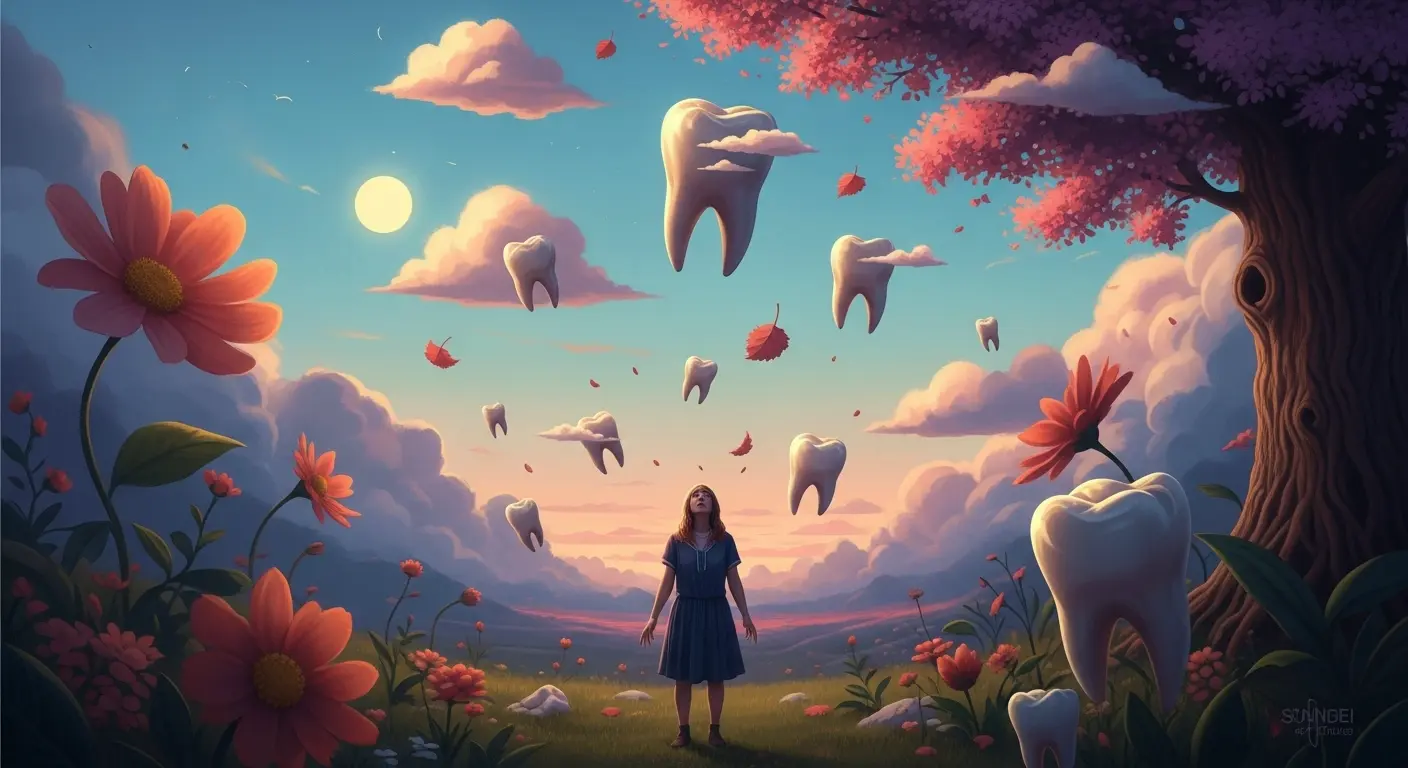
Few images are as visceral as feeling teeth loosen and slip out. This scene often mirrors a loss of control or a perceived drop in personal agency. You might be moving through a life change you didn’t choose - a restructuring at work, a shift in a close relationship, a new responsibility you didn’t anticipate. For some, the dream zooms in on self-image, aging, or fear that others will notice a flaw. For others, it echoes a struggle to say what needs to be said. In developmental terms, losing teeth can also read as transition, like a child trading baby teeth for adult ones. Something old is leaving, something sturdier can follow. The mood matters: panic hints at resistance to change; a quiet acceptance may suggest readiness for the next chapter.
✦ Broken or Cracked Teeth
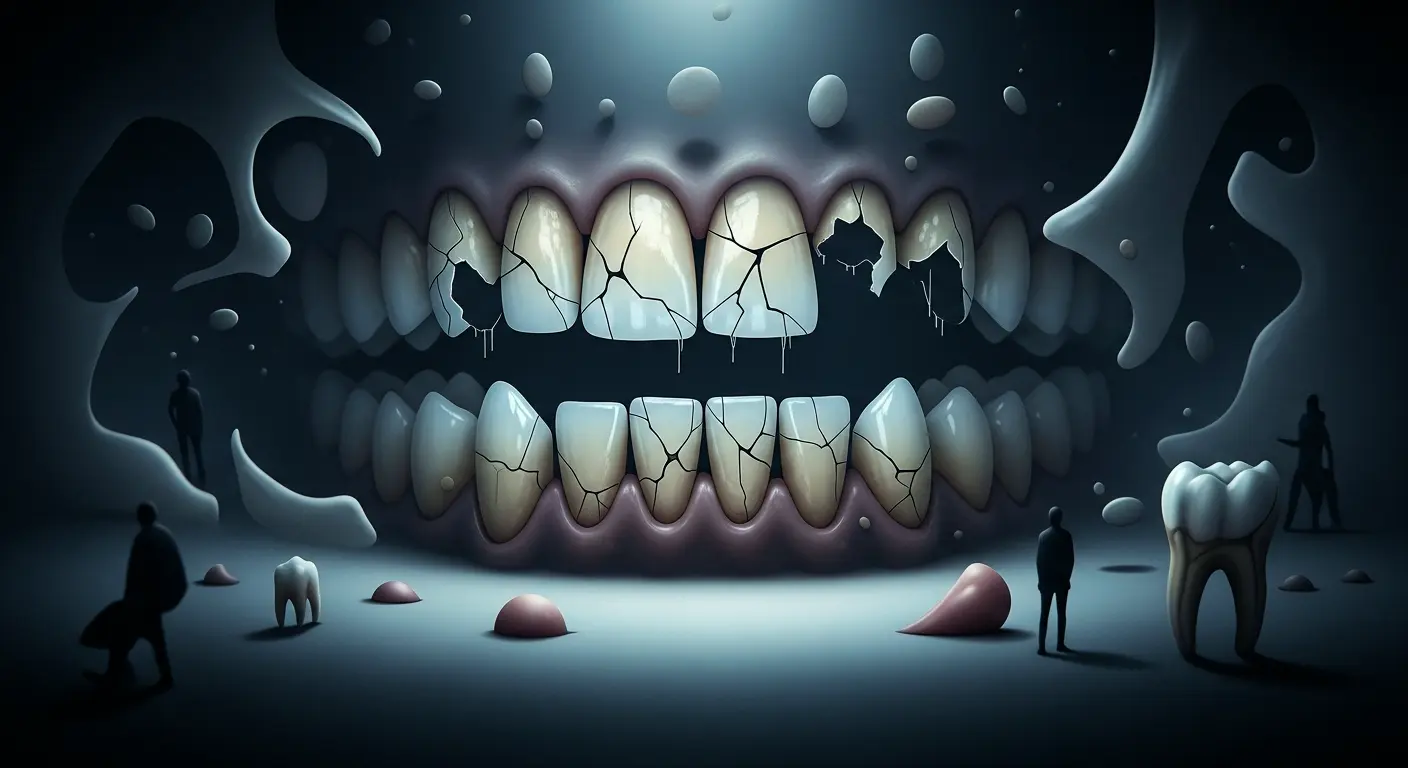
Chipped, fractured, or ground-down teeth often point to vulnerability and the dread of being exposed. You may be taking on a demanding task while privately wondering if your strength will hold. The dream can also surface worries about reputation or a misstep that might become public. If the break occurs mid-bite, it may suggest that the method you’re using to tackle a problem is wearing you down - too much force, not enough care. On a simpler note, bruxism or stress can fuel this imagery. Still, the question remains: in what part of life do you feel brittle, as if a hairline crack is spreading under pressure?
✦ Rotting Teeth
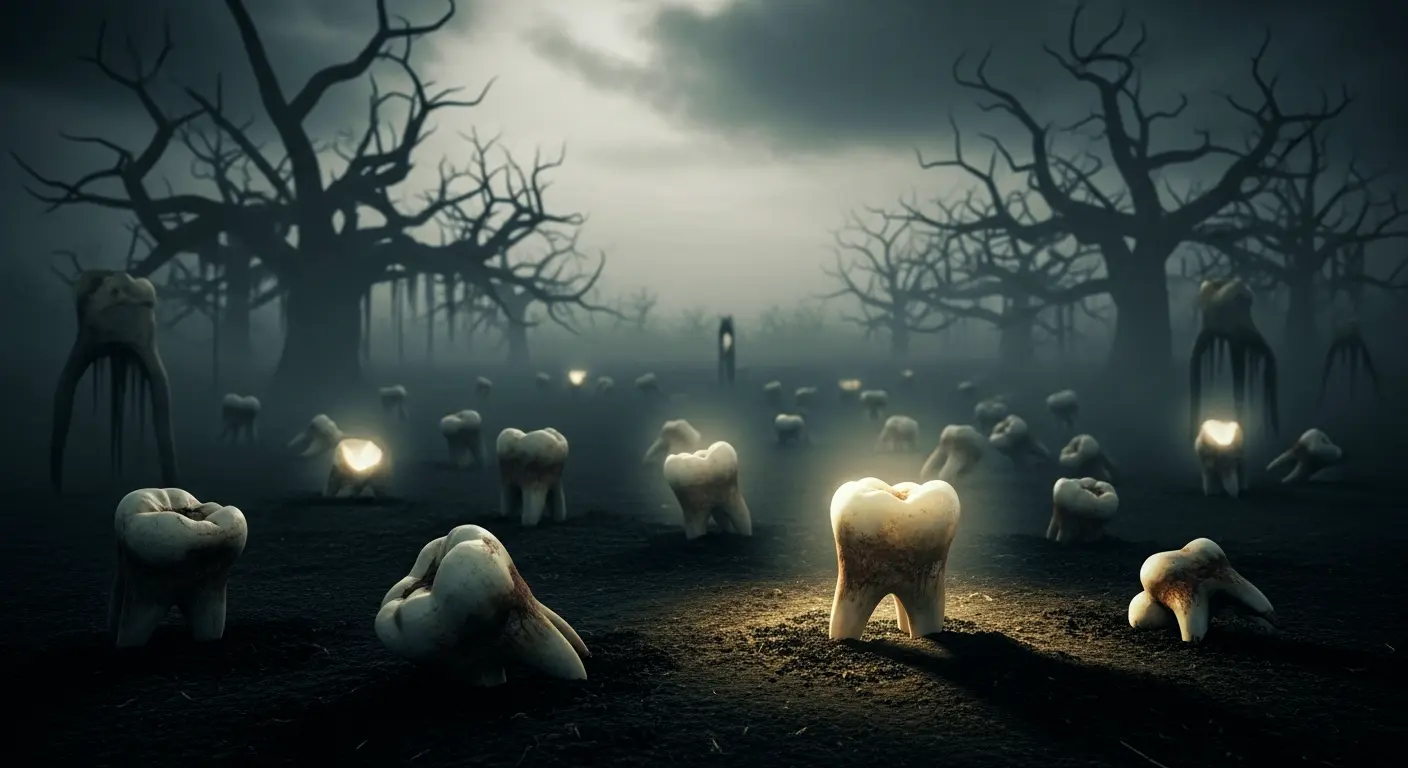
Decay suggests neglect - something once tended has been left too long. This dream can point to a project, a relationship, or self-care routine you’ve postponed. Guilt often hangs in the air like a sour undertone. Rather than a punishment, consider the image a nudge toward maintenance: a check-in with a friend, a medical appointment, a recalibration of daily habits. Sometimes the dream highlights integrity - have small compromises accumulated until they tarnish how you see yourself? Rotting teeth can be a call to restore what matters, one practical step at a time.
✨
A quick lens
When teeth fail in a dream - fall, crack, or rot - ask two questions: Where do I feel my voice isn’t landing? What needs maintenance rather than force? Simple answers often unlock the meaning.
✦ Growing Extra Teeth
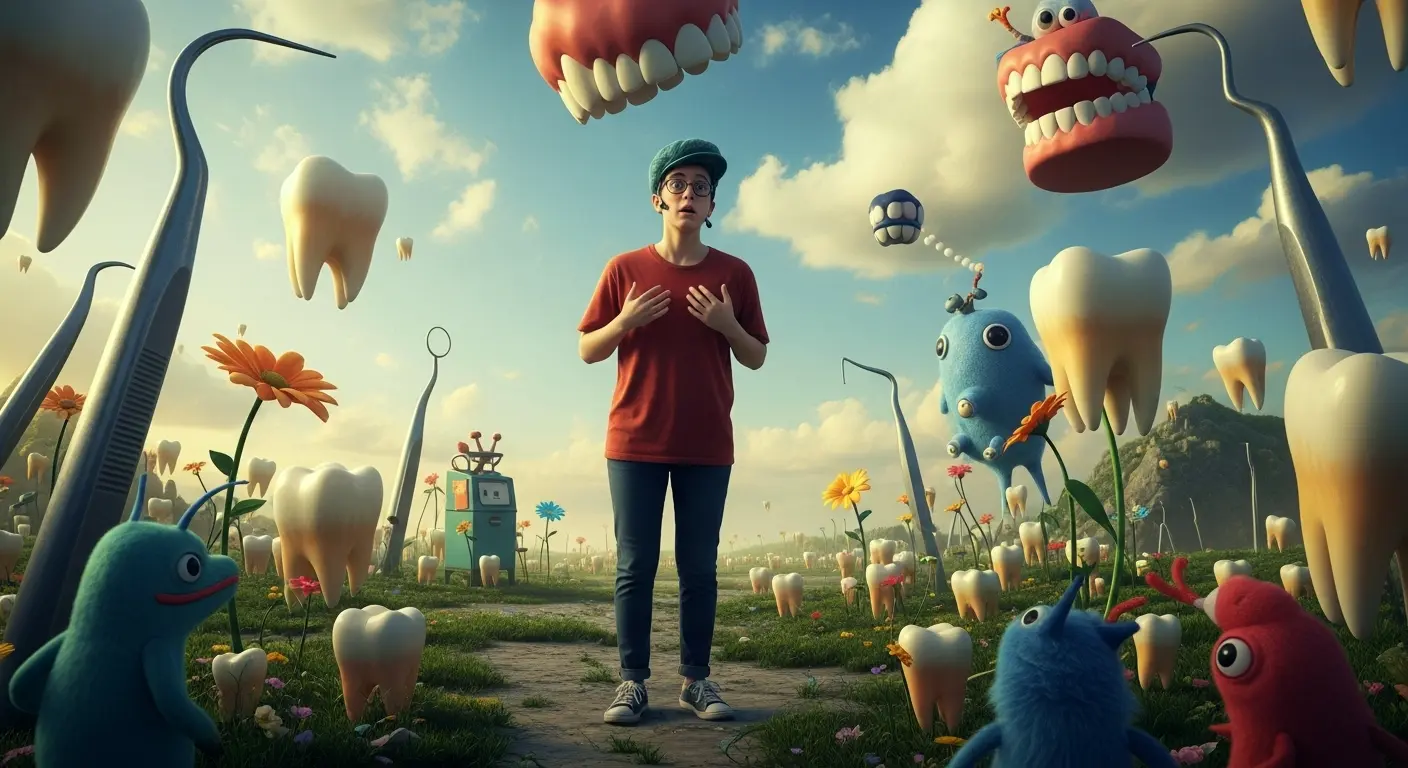
New teeth sprouting in unexpected places can feel eerie yet powerful. This is a classic sign of growth - more capacity, more bite, more presence. Perhaps you’re developing skills you didn’t know you had, or gaining authority in a role that once intimidated you. Sometimes the feeling tips into excess, as if power is crowding the mouth, making speech awkward. If the image feels uncomfortable, consider whether you’re trying to hold too much at once. If it feels thrilling, let the dream confirm what you suspect: you’re ready for bigger tasks and a stronger voice.
✦ Brushing or Cleaning Teeth
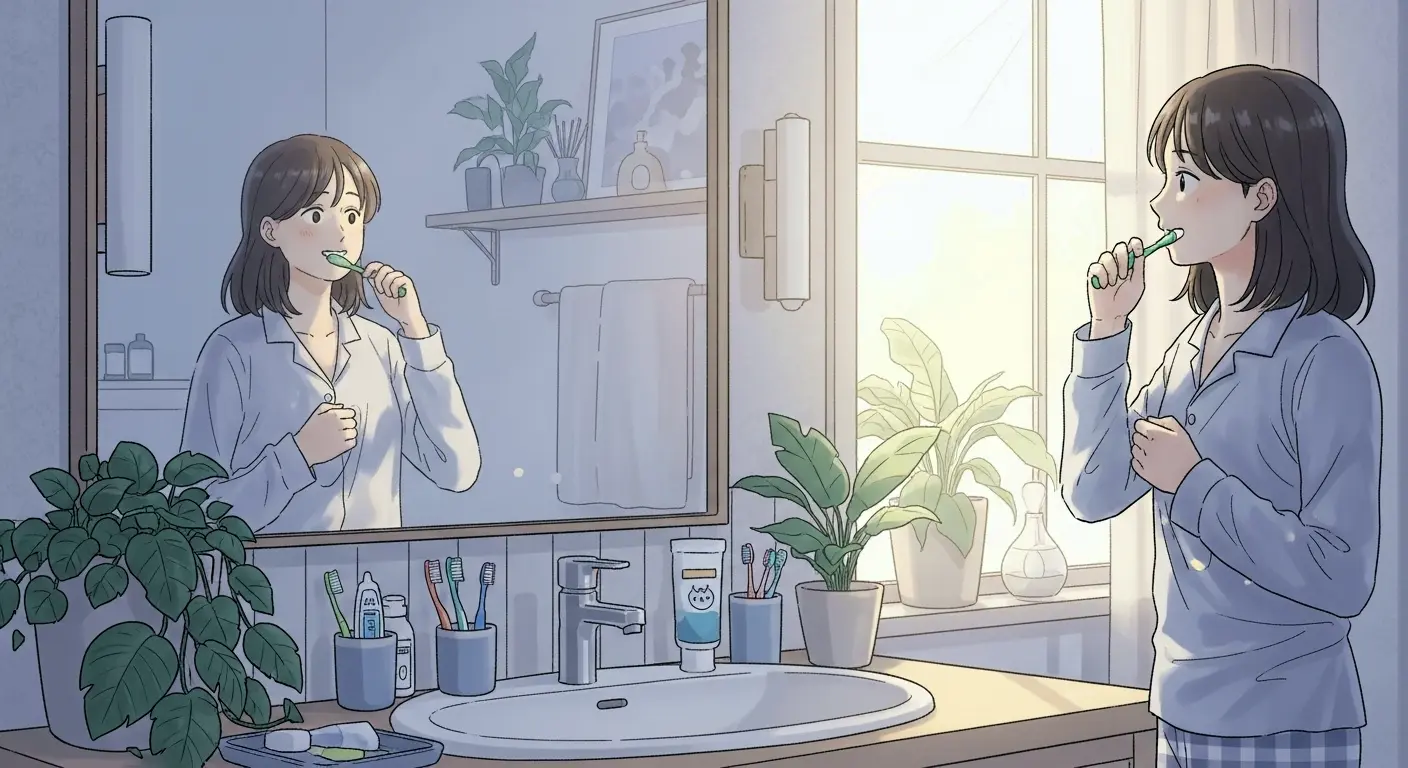
Cleaning scenes are all about care and presentation. To brush in a dream is to prepare for contact - for a meeting, a confession, a promise. It can also speak to ethics: the wish to align actions and values, to feel “fresh” about your choices. If you scrub anxiously and nothing looks better, the dream may be hinting that the problem isn’t cosmetic but structural. What needs real repair, not just polish? On the other hand, an easy, satisfying clean can reflect momentum in daily rituals that support your confidence.
✦ Teeth Falling Out and Regrowing
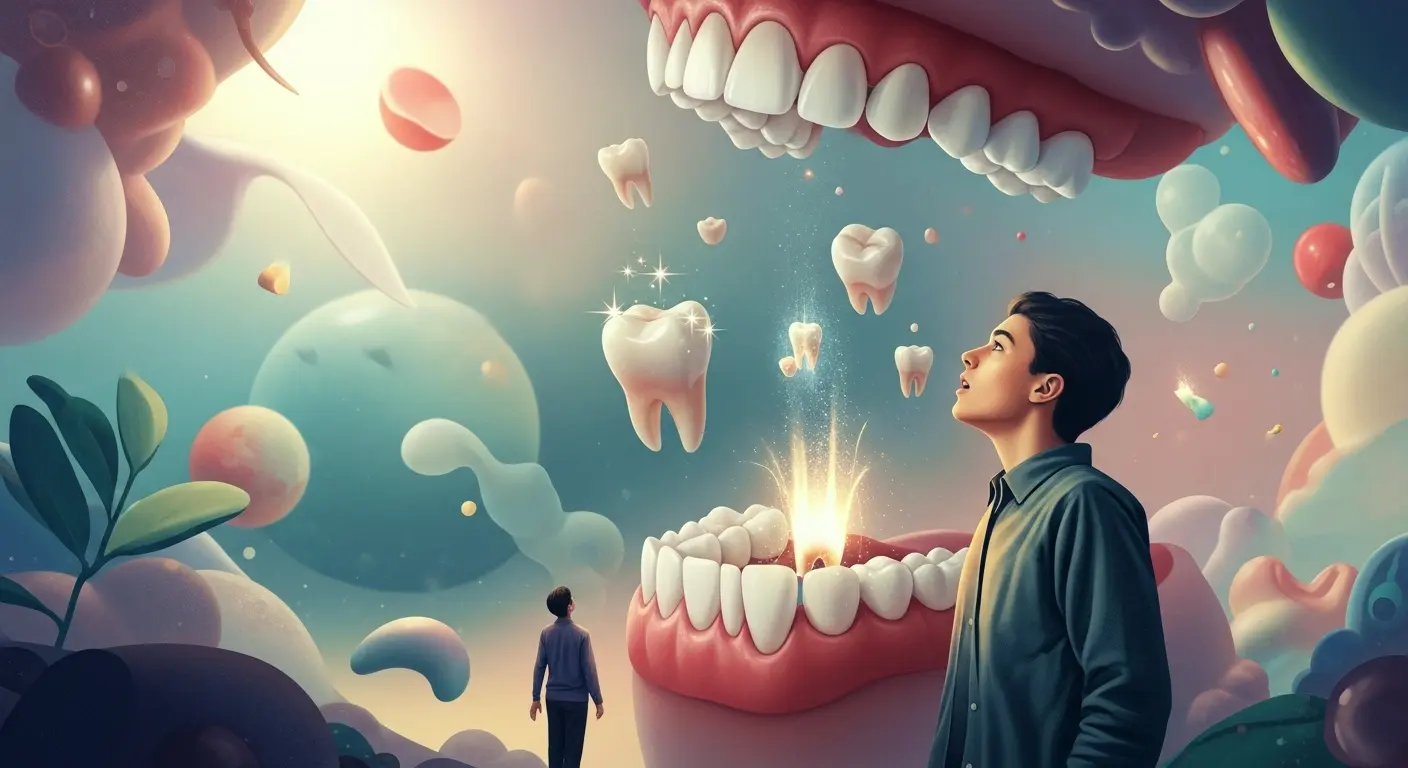
Teeth that drop and then return point to renewal - loss followed by restoration. Think of seasons: leaves fall, sap rises, buds open. This dream may arrive after a setback when you’ve just started to bounce back. It’s also common during times of identity reshaping - moving cities, parenting shifts, recovering after an illness. The body of the dream says: resilience is real. Even so, regrowth doesn’t always match the old shape. New teeth can feel strange at first, just like new habits, but they settle as you practice.
✦ Pulling Teeth
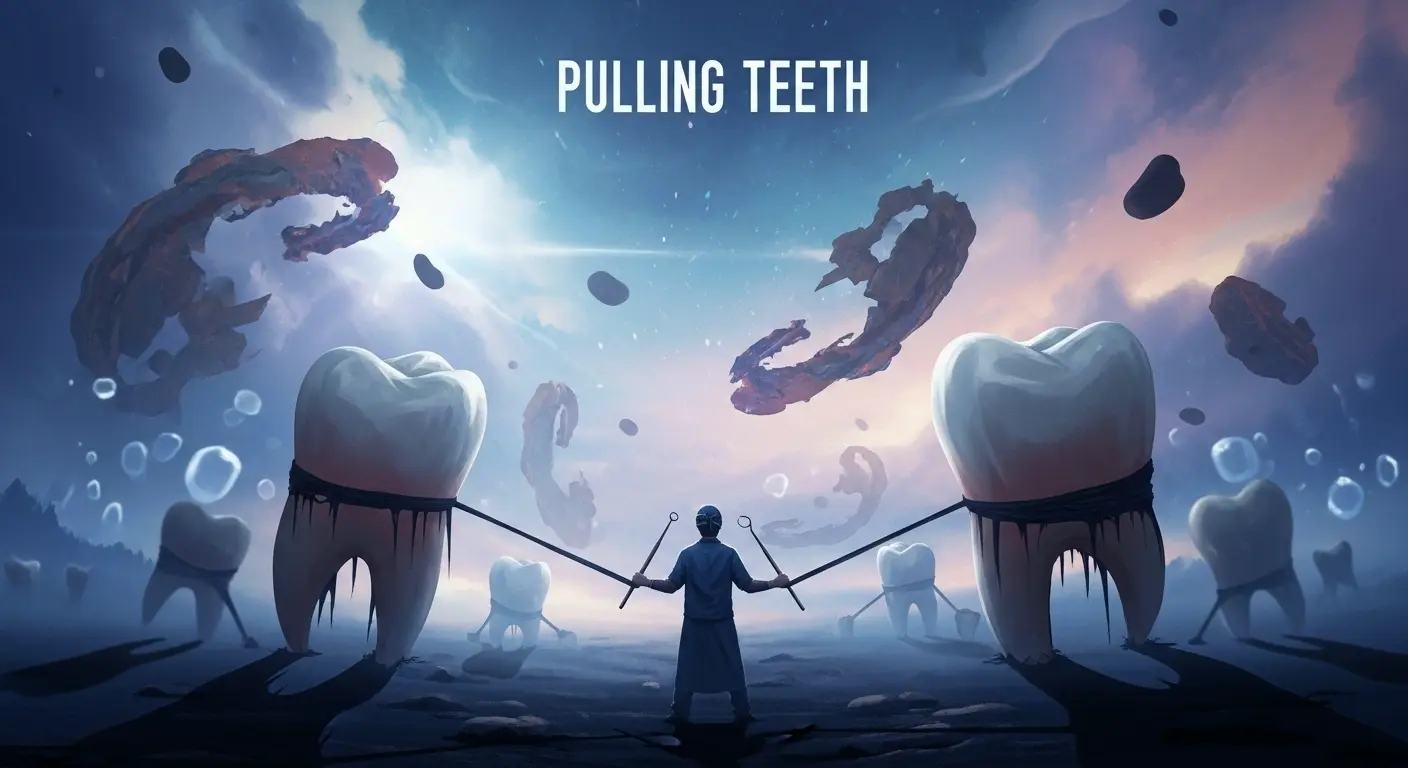
To pull a tooth - yours or someone else’s - is an unsettling image of decisive removal. It often signals the need to extract a problem at the root: a draining task, a boundary crossed, a truth avoided. Sometimes the tooth fights back, clinging stubbornly. That resistance can mirror the cost of change. If the extraction brings relief, the dream may be blessing a necessary ending. If it feels wrong, consider whether the timing is off or if there’s an easier, kinder approach available.
✦ Gold or Jeweled Teeth
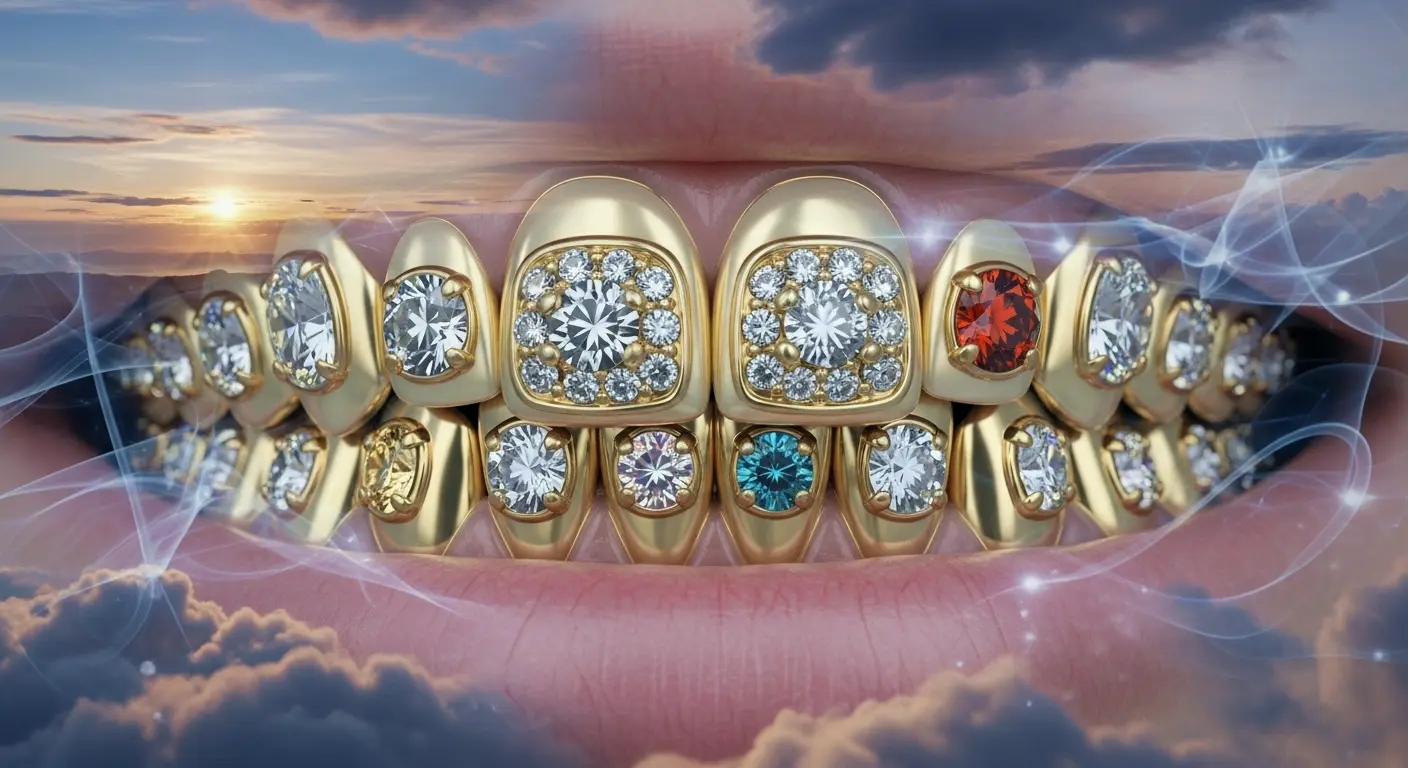
Precious materials in the mouth spotlight value, status, and pride. A gold tooth can symbolize self-respect that has been earned - the kind of confidence that holds up over time. Diamonds and gems may point to recognition or the wish to be seen as exceptional. Yet there’s a caution here: adornment can also be a mask. Ask what you value most right now. Is your shine based on external approval or an inner sense of worth? The difference matters; one fades, the other tends to deepen.
✦ Talking Teeth or Teeth Falling Out While Speaking
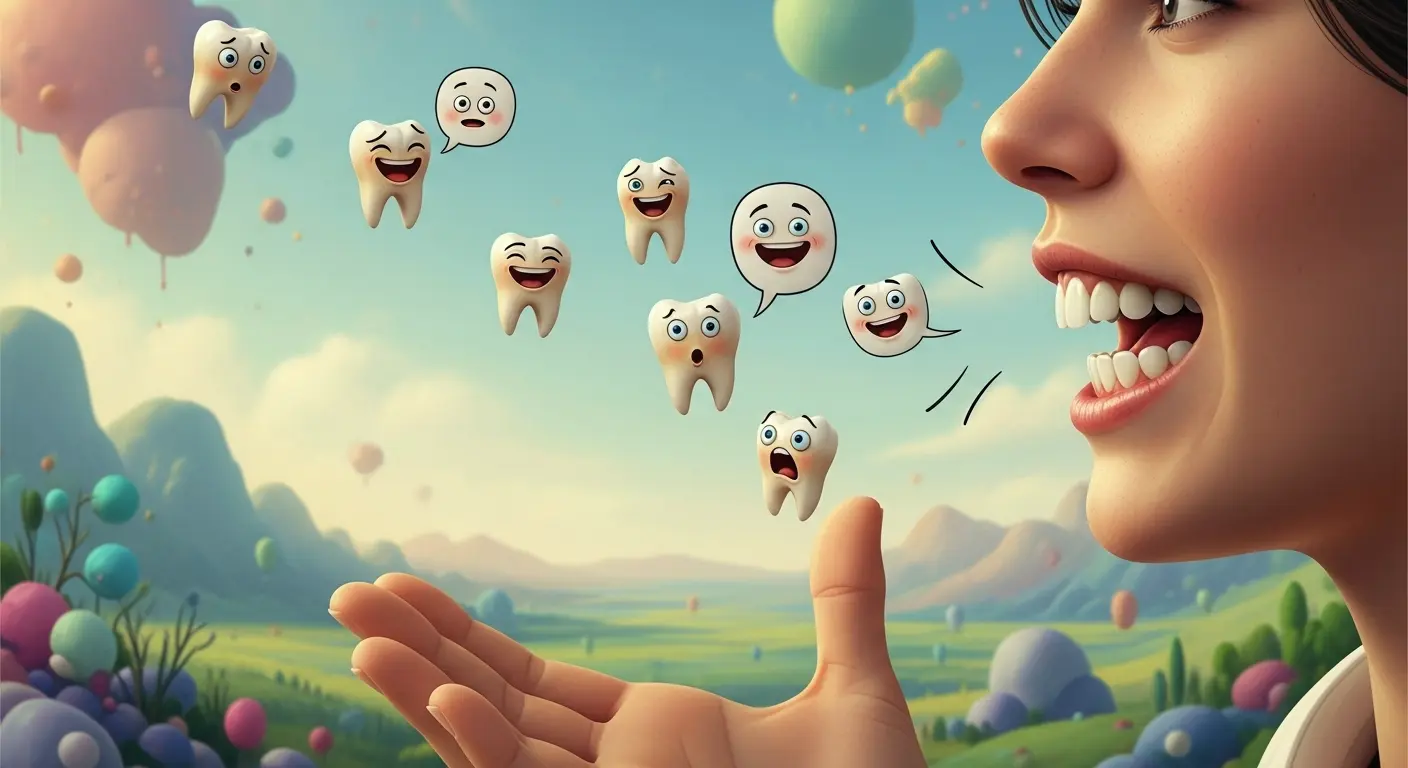
Speech scenes are about communication anxiety - being misunderstood, saying too much, saying too little. Teeth that slip while you talk can reflect fear that your message will crumble as soon as it leaves your lips. Perhaps a presentation looms or a personal conversation keeps getting postponed. The dream may be a rehearsal hall, suggesting you slow down, prepare, and find simpler words. Paradoxically, it can also point to honesty: once the fragile pieces fall away, your real voice appears - clear, human, and steady.
✨
Small detail, big meaning
Notice texture: gritty crumbs, smooth enamel, a metallic tang. Sensory notes often identify the theme - neglect vs. polish, decay vs. restoration - even more clearly than the plot.
Psychological Interpretation of Teeth in Dreams
Early psychoanalysis cast a long shadow on dream work. Sigmund Freud viewed teeth imagery through the lens of instinct and anxiety. In his model, losing teeth could represent castration fears or threats to potency - especially salient in men - and more broadly, tension around sexual energy and control. He framed symbols as disguises for repressed wishes, shaped by the pressures of culture and conscience.
Carl Gustav Jung stepped to the side of that narrow frame. He read teeth as expressions of life force, agency, and the ability to meet the world head-on. For Jung, dreams of loss might reflect a wobble in confidence, fear of aging, or the shock of confronting mortality - but also the psyche’s push toward wholeness. He highlighted personal associations and the shared language of archetypes, letting the individual’s story lead.
Contemporary practice blends these streams. Clinicians often explore both universal motifs and the dreamer’s biography: family messages about appearance, early experiences with speaking up, recent stressors, even the trace of a dental visit earlier in the week. Technology can help too. For a tailored reading rooted in classical theory and personal nuance, you can try an AI-psychoanalytic interpretation and compare it to your own reflections. If it resonates in your body - a softening in the chest, a sense of recognition - you’re likely close.
One caution: dreams are not verdicts. They are experiments, acts of imagination that test a feeling against images. When a tooth breaks in your sleep, it doesn’t predict failure; it invites you to ask what feels fragile and how to support it. That small change of stance can turn anxiety into guidance, almost overnight.
Spiritual Meaning of Teeth in Dreams
Across traditions, teeth often carry spiritual weight: wisdom, truth-telling, and personal power anchored in the body. Losing a tooth can mark a shedding of stale beliefs so a cleaner truth can come through. In some paths, new teeth signal initiation - a stronger bite for a deeper calling. The dream may also serve as a mirror from the deeper self: Are you chewing on an idea without digesting it? Are you hungry for meaning but feeding on distractions?
Spiritual readings don’t cancel psychological ones - they round them out. A rotting tooth can be both a sign of neglected habits and a symbol of stale vows that need renewal. If you leave the dream with a quiet sense of clarity rather than fear, that shift itself hints at a spiritual dimension. Listen for that temperature change inside you. Dreams speak in metaphors, but their guidance often lands as a calm nudge or a sudden, steadying breath.
Somnologist's Commentary
Alexandra Gainsbourg, a respected somnologist, emphasizes the primacy of lived context. “Teeth dreams,” she notes, “don’t come with fixed meanings. What matters most is how the dreamer feels during and after the scene.” Panic may point toward threatened control; relief suggests a release; a strange curiosity can indicate readiness to grow. Gainsbourg encourages journaling within a day of the dream so sensory texture doesn’t fade - the chalky crumble, the click of enamel, the look someone gave you in the mirror.
She also highlights patterns. One dream can mislead; five dreams tracing the same arc are difficult to ignore. Track triggers - job stress, a family conversation, a dental visit - next to the dream, and notice what shifts. If the teeth stop breaking when you set a boundary at work, the message practically writes itself. Improvisation is allowed here, and useful: if the dream suggests care rather than force, try it for a week and watch what changes. Many people discover that small, steady steps restore the bite they thought they’d lost.
How to Work With Teeth Dreams
Action turns insight into change. These brief practices can help you translate a striking image into daily life without overcomplicating the process.
- Capture the scene quickly: Jot down the moment of impact - the first tooth falling, the sound it made, who was watching. Keep it short to preserve the mood.
- Name the emotion: Was it panic, embarrassment, relief, pride? Emotions are the compass; they point to meaning faster than logic.
- Find the waking parallel: Ask, “Where in life does this same feeling live?” A meeting, a conversation with a parent, a bill you keep postponing?
- Test one small shift: Replace force with care. Prepare your words the night before. Set a gentle boundary. Book the checkup. Then notice whether dream themes soften.
- Review your story about power: Do you believe you must bite hard to be heard, or can a steady voice do the job? Update the story to fit the person you’re becoming.
If anxiety spikes around appearance, experiment with rituals that support confidence - a haircut, a polished outfit, a mindful posture check. Not as armor, but as alignment. If the theme is honesty, write a script of five sentences you can say calmly. If the issue is neglect, pick one neglected task and do the first 10 minutes today. Small acts restore structural integrity faster than grand vows.
Remember to track progress. If teeth stop falling out in your dreams and start regrowing, you’re probably meeting the need the psyche highlighted. If the imagery persists, refine your hypothesis. Ask someone you trust for perspective, or consult a professional for a brief check-in. Dreams are iterative - they learn from the changes you make, and they respond.
Lastly, be kind about the timing. Growth often arrives unevenly - clean one day, gritty the next. That’s normal. Teeth dreams are not predictions,, they are reflections. Treated with curiosity rather than alarm, they can become reliable allies.
FAQ
Still have questions? This section clears up common concerns about teeth dreams, from timing and stress to other people’s teeth and medication effects. Use it as a practical companion to the interpretations above.
Are teeth dreams always a bad sign?
Why do these dreams show up during stress?
Stress tightens the body and mind, and teeth are literal tools of tension. Worries about performance, image, or conflict often find a quick metaphor in the mouth. Good sleep habits and small, targeted actions usually reduce the frequency.
What if the dream focuses on someone else’s teeth?
Consider projection. You might be reading power, honesty, or vulnerability in that person - or noticing a trait you share. Ask what quality their teeth symbolize to you: polish, bite, or the risk of breaking under pressure.
Can medications or dental issues trigger teeth imagery?
Yes. Certain medications, bruxism, or a real dental ache can prime the theme. Even then, your mind often weaves the body cue into a personal story. It’s both/and: address the physical cause and explore the emotional meaning.
Sources & Further Reading
- The Interpretation of Dreams - Sigmund Freud (1900).
- Man and His Symbols - Carl G. Jung (1964).
- The Meaning of Dreams - Calvin S. Hall (1953).
- The Scientific Study of Dreams: Neural Networks, Cognitive Development, and Content Analysis - G. William Domhoff (2003).
- Dreams and Nightmares: The Origin and Meaning of Dreams - Ernest Hartmann (2001).
Read more