Not usually. Dreams are metaphor-rich narratives shaped by memory, emotion, and nightly brain activity. They can reveal desires, but often through symbols and mood. Let feelings lead, explore personal associations, and avoid rigid, one-size-fits-all meanings.
Do Dreams Reflect Your True Desires?
Dreams arrive like weather in the night - a change of light, a strange breeze, a deep wave of feeling. Sometimes they echo the day in a funhouse mirror; other times they carry messages we didn’t know we needed. The question that lingers is simple and slippery: do dreams reveal what we truly want? The short answer is yes, sometimes. The long answer is richer, because desire is layered. What we crave can be urgent or shy, conscious or buried, straightforward or masked in symbol.
Table of Contents
Do Dreams Reflect Our True Desires?
Dreams are not a single language; they’re a chorus. At times, they speak plainly. You’re parched in the desert, you find water, you drink - desire meets fulfillment in one clean image. More often, they move in symbols and metaphors. A locked room might stand in for a promotion that feels just out of reach. A broken phone could echo your wish to communicate better, or your frustration at not being heard. Desire hides in the edges of the scene, in the temperature of the mood.
We carry daily residues into sleep: a tense meeting, a warm hug, a half-finished thought. These fragments mix with older memories and emotional patterns. The result is a dream that may tilt toward wish fulfillment, avoidant rehearsal, or emotional problem-solving. It is not either-or. A dream about winning an award can be a hope for recognition and a rehearsal for fear of being seen. Context matters - your life right now, your history, your feelings on waking.
The body speaks too. Notice the pull in your chest as you fly, or the sink in your stomach as you fall. That sensation is a compass. Ask yourself on waking: what did I want, what did I fear, and which felt stronger? Desire often wears both masks. It wants, and it hesitates. The dream feels into both directions and lets you try them on safely.
Common Dream Scenarios and What They Reveal
✦ Flying Dreams

Flying dreams lift you above the grid of daily life. You feel wind in the ears, rooflines drifting beneath, a quiet mastery of space. These dreams often resonate with a wish for freedom, independence, or a clear view beyond today’s limits. If you’ve felt boxed in, the dream’s upward motion can mirror your drive to break orbit and reclaim perspective. Sometimes you can steer; other times you drift. That difference is meaningful. Easy control may echo growing confidence, while wobbling flight can point toward a desire for more skill, support, or practice in directing your path.
✦ Falling Dreams

That stomach-drop, the sudden rush, the hard wake - falling dreams are visceral. They frequently speak to insecurity or a loss of control, especially during transitions. You may be weighing a big decision, changing roles, or living through uncertainty that nudges your nervous system into high alert. Beneath the fear is often a wish for ground, steadiness, a safer landing place. For some, there’s also a hidden longing to let go - to stop gripping what no longer fits. If the fall ends softly, note that relief. It can signal a desire to surrender certain pressures and find trust in a new rhythm.
✦ Being Chased Dreams

In chase dreams, your legs are heavy, the hallway stretches, the sound behind you won’t quit. What’s pursuing you matters - a stranger, a shadow, a boss, an animal. The pursuer often mirrors what you’re trying not to feel or face. The desire here may be indirect: a wish for safety, relief, or the courage to turn around and negotiate with what scares you. Notice where you run to. A locked car, a friend’s house, a forest path - these places hint at the sort of refuge you want, whether boundaries, community, or time alone. Sometimes the deepest desire is simple: space to breathe.
✨
Desire or Anxiety?
Ask yourself a quick litmus question on waking: if this dream became real, would I feel relief or excitement? Relief hints at a desire to be free from pressure; excitement suggests a wish to move toward something vivid. Both can coexist, and that tension is informative.
✦ Naked in Public Dreams

Few dreams feel as exposed as stepping into a crowd with nothing to hide behind. This classic scenario points to vulnerability, fear of judgment, or the wish to be accepted as you are. It can also highlight a deeper longing to drop the performance and be more transparent - at work, with friends, in love. Where are you naked? The stage, the office, the classroom each speaks to the arena that matters most. Feeling shame suggests a desire for protection, while feeling oddly calm may show a growing appetite for authenticity and congruence.
✦ Teeth Falling Out Dreams
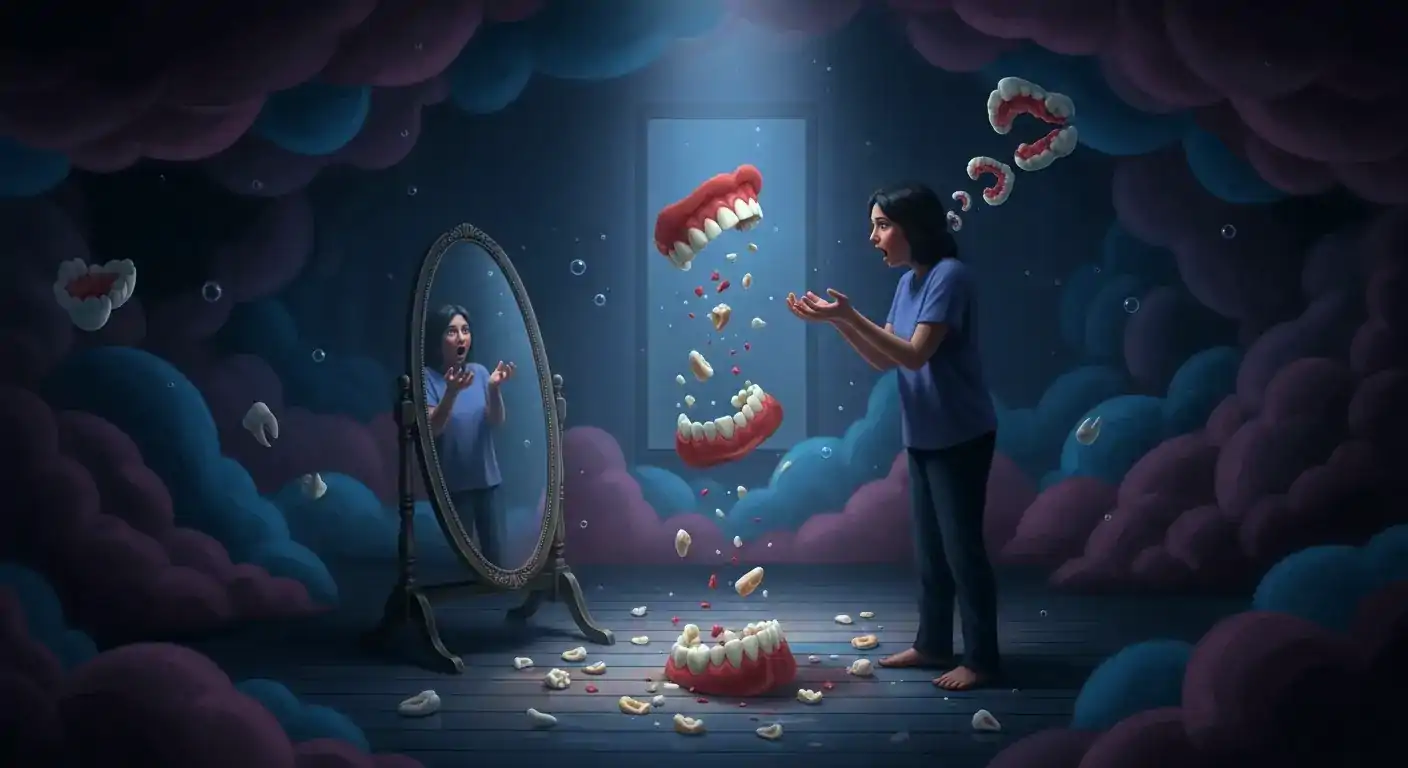
Teeth dreams are vivid, tactile, and unsettling. They scrape at themes of appearance, power, and speech. When teeth crumble or scatter, the dream may echo worries about aging, attractiveness, or the solidity of your voice. But there is a desire hiding in the disruption - to communicate more clearly, to regain bite, to feel solid and capable again. Pay attention to what you do next in the dream. Do you hide the gap, search for a dentist, spit the teeth into your hands? Each action locates a wish, whether for repair, help, or the courage to speak anyway.
✦ Test or Exam Dreams

Late to the exam, wrong room, missing pencil - the brain loves this theater of evaluation. These dreams mirror the pressure of being judged and the desire to measure up. They’re common during performance seasons, promotions, or new demands. Under the stress is often a wish for competence recognized, for preparation to pay off. If the subject is one you never studied, there may be a desire for permission to learn as you go, rather than perform perfection. When you wake, notice whether you crave external validation or a more internal seal of approval. That distinction points to next steps.
✦ Romantic Dreams

Romantic dreams can be tender, electric, or oddly confusing. They often reflect a wish for closeness, warmth, and reciprocity. If a crush or ex appears, it might not mean you literally want them back. More often, the person acts as a vessel for qualities you long for now - playfulness, depth, a sense of being seen. In steady relationships, such dreams can highlight missing ingredients or simply rekindle appreciation. The desire here is nuanced: to be chosen, to be touched, to be mirrored. Notice the emotional tone at the end - fulfillment, ache, or curiosity - and let that guide your understanding.
✦ Water-related Dreams

Water wears many moods, and dreams borrow them freely. A calm lake suggests a desire for peace and emotional clarity. Choppy surf or a dark river may reflect a wish to face what feels overwhelming and come out stronger. Drowning dreams can echo periods when feelings threaten to flood the system; the hidden longing might be for buoyancy, skill, or a hand to hold. Swimming underwater with ease, by contrast, often signals a wish to dive deeper into the self - to explore submerged memories or truths without panic, with steady lungs and steady light.
✦ Finding Money or Valuables Dreams

Discovery dreams - a wallet on the ground, a ring in the sand, a treasure behind a loose brick - map the terrain of worth. Sometimes the desire is practical: more resources, less financial strain, the ability to fund a goal. Yet valuables also stand for inner assets. A gold coin might be your resilience; a hidden gem your creativity that wants to be unearthed. Where you find it matters. In public suggests recognition; in a basement points to private reclamation. The dream’s spark of surprise is its clue: you already hold more than you thought.
✦ House or Home Dreams

Houses in dreams often mirror the self - rooms for memory, windows for perspective, doors for choice. Entering a home you’ve never seen can reveal a desire to explore new parts of your identity. Opening an attic suggests curiosity about ideas and ideals; descending into a basement points to deeper emotions or old stories asking for attention. A childhood home can carry the wish for safety or simplicity. Renovations, meanwhile, speak to a drive for growth - to make your inner architecture more livable, more yours. If a light turns on, notice that glow. It’s a desire for awareness, softly made visible.
Psychological Perspectives: Freud, Jung, and Beyond
Sigmund Freud framed dreams as the royal road to the unconscious, with wish fulfillment at their core. He saw two layers in every dream: the manifest content (what you remember) and the latent content (the underlying desire or conflict). Because the mind censors what feels threatening, latent wishes appear disguised - in symbols, displacements, and condensations. This view places desire as a central engine of dream-making, even when the plot looks more like a tangle than a wish.
Carl Gustav Jung agreed that dreams come from the unconscious but widened the lens. For Jung, dreams compensate for one-sidedness in waking life - offering balance, guidance, and a path toward wholeness. He emphasized the collective unconscious and archetypes, those universal patterns that surface in images like the shadow, the hero, or the great mother. In this view, a dream doesn’t only fulfill a wish; it may correct a stance, present a teaching, or reveal a missing quality the psyche longs to integrate.
Contemporary approaches add still more nuance. Cognitive and relational perspectives treat dreams as a theater for problem-solving, emotional regulation, and social rehearsal. Desire is present, yet braided with fear, learning, and memory. If you want to explore these layers through a modern lens, an AI psychoanalytic interpretation can offer structured prompts about hidden wishes, defenses, and personal history - not as a verdict, but as a thoughtful starting point.
✨
Manifest vs. Latent
Manifest content: the dream you can tell. Latent content: the wish, fear, or conflict beneath it. Good interpretation moves between both - honoring the dream’s literal story while feeling for the deeper current it carries.
What Science Says About Dreams and Desire
Neuroscience paints a dynamic picture of dreaming. During rapid eye movement (REM) sleep, brain regions tied to emotion and memory - like the amygdala and hippocampus - show heightened activity, while areas linked to executive control quiet down. This helps explain why dreams feel vivid and emotionally charged, yet loosely organized. Desire finds a channel, but logic takes a softer seat.
Studies of dream content suggest that our nightly stories often reflect everyday concerns and emotionally salient goals. People in intense seasons of study dream about tests; new parents dream of their infants. Still, researchers warn against a simple one-to-one translation. Dreaming is shaped by memory consolidation, emotional processing, creative recombination, and a good measure of randomness. A single image can be overdetermined - carrying multiple meanings at once - which is why your feeling state on waking is such a valuable clue.
Content analysis over decades shows recurring themes across cultures, while still respecting personal nuance. Scientific caution is healthy here. Dreams may reveal desire, but not always directly; sometimes they express what we avoid, or what we’re learning to hold. The most reliable approach blends patterns and particulars. Track your dreams over weeks, compare them with your life arc, and let the data be your compass. However I wouldn’t force a tidy answer too fast - the mind is subtler than that.
How to Work With Your Dreams Day to Day
Interpreting dreams is less like decoding a secret message and more like listening to music. You attune. You notice rhythms. You let associations unfold at their own pace. These practical steps can help you honor both desire and complexity in your nightly stories.
- Catch the fragments. Keep a notebook or notes app beside the bed. Jot two lines even if you wake at 3 a.m. Keywords matter. Often the scent of the dream returns as you write.
- Title the dream. Choose a headline in ten words or less - "Running on the Rooftops," "Teeth in the Sink," "Secret Door Opens." Titles surface desire fast.
- Track feelings before plot. Write three emotions you felt during the dream, then three you felt on waking. Where do they differ or echo? That gap is instructive , and personal.
- Translate images into verbs. Instead of "a locked door," write "I’m trying to enter." Verbs reveal wishing and resisting better than nouns.
- Ask two guiding questions. What did I want here? What did I fear here? Let both answers stand side by side.
- Look for patterns across a month. Repeating symbols, settings, or people point to ongoing desires - for safety, for recognition, for rest, for risk.
- Bridge to action. Pick one small step aligned with the dream’s wish. If you craved voice, send the email. If you needed calm, take the walk. Action respects the message.
- Use supportive tools. To explore universal motifs with fresh perspective, try an AI symbolic interpretation that offers archetypal angles you can accept, revise, or reject. Your own associations still lead.
Here is a brief example. Dream: "I’m climbing a long staircase to give a talk, but the door at the top won’t open. I hear people waiting on the other side." Feelings: determined, anxious, oddly excited. Possible reading: a desire to share your work, paired with fear of entry. The door may be confidence, skill, or permission. A small action could be rehearsing with a friend, or sending one paragraph to a mentor for feedback. Desire becomes motion when it meets a step you can actually take.
✨
Tiny Prompts, Better Recall
Before sleep, whisper one line: "I’m open to remembering what matters tonight." On waking, stay still for five seconds. Ask, "Where was I?" The first image that returns - a staircase, a color, a voice - is your thread. Follow it gently.
Expert Insight
Alexandra Gainsbourg, a seasoned sleep researcher and dream analyst, offers a measured view: "Dreams can spotlight our desires, but interpretation works best with nuance. Night stories are a weave of emotion, memory, and everyday residue. One night’s pizza can tinge a scene; a decade-old wish can fuel it. Treat dreams as potent clues, not verdicts. They open doors - you get to decide which ones to walk through." Her advice invites curiosity without rigidity, encouraging you to test meanings against your actual life and see what moves the needle.
FAQ
Have a question that didn’t fit above? This quick FAQ gathers common worries and curiosity about desire in dreams - from old flames reappearing to recurring stress scenes. Use it as a springboard for reflection, then test every answer against your own experience.
Are dreams literal messages from the subconscious?
Why do I dream about an ex when I’m happy now?
An ex can symbolize a quality, time, or feeling rather than the person. The dream may highlight a desire to rekindle playfulness, safety, or adventure - within your current life. Focus on the emotion the ex represents, not a literal reunion.
How can I reduce recurring anxiety dreams?
Try rehearsal techniques: rewrite the dream with a slightly better outcome, then visualize it before sleep. Support sleep hygiene, set gentler evening inputs, and take one small daytime action that answers the dream’s core stressor. Consistency helps.
Can dreams predict the future?
Dreams are better at forecasting feelings than events. They can anticipate likely outcomes by combining memory and pattern detection. Treat any "prediction" as a possibility. If it stirs desire or caution, act thoughtfully in the present.
Sources & Further Reading
- The Interpretation of Dreams - Sigmund Freud (1900).
- Man and His Symbols - Carl G. Jung (1964).
- The Content Analysis of Dreams - Calvin S. Hall & Robert L. Van de Castle (1966).
- The Scientific Study of Dreams: Neural Networks, Cognitive Development, and Content Analysis - G. William Domhoff (2003).
- Dreams and Nightmares: The Origin and Meaning of Dreams - Ernest Hartmann (2001).
- Creative Dreaming - Patricia Garfield (1974).
Read more